The recent DUI arrest involving Tiger Woods is putting a national spotlight on a major shift in Florida DUI law, one that is already changing how cases are prosecuted and defended. After a rollover crash in South Florida, Woods submitted to a breath test that showed no alcohol, but refused a urine test, triggering additional criminal consequences under a law that took effect in late 2025.
For drivers across Florida, this case is more than headline news. It is a real-world example of how DUI laws have changed, and how a single decision during a traffic stop can now carry serious legal consequences.
What Happened in the Tiger Woods DUI Case
Tiger Woods was arrested following a crash in Florida where deputies reported signs of impairment, including sluggish behavior and difficulty with field sobriety exercises.
While he blew a 0.00 on a breathalyzer, officers suspected possible drug or medication impairment. When asked to provide a urine sample, Woods refused.
That refusal is now a major legal issue because of Florida’s updated DUI laws, and it is one of the key reasons the case is receiving so much attention.
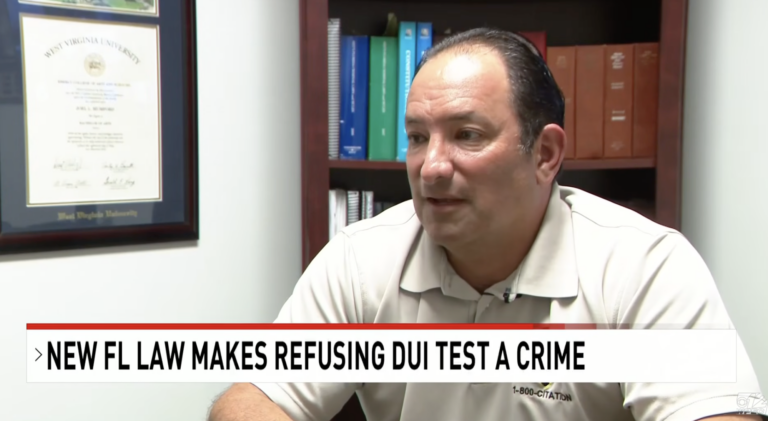
Ted Hollander Breaks It Down on CBS
Ted Hollander of The Ticket Clinic was recently interviewed by CBS to discuss the case and what it means under the new law.
During the interview, Hollander explained a critical nuance that many drivers do not understand:
- The new law adds criminal penalties for refusing testing
- But refusal can also remove key evidence from the prosecution’s case
As Hollander noted, without a urine or blood test, prosecutors may have to rely on observations, statements, or circumstantial evidence to prove impairment.
That creates a legal tension. The law punishes refusal more harshly, but in some cases, it may still make DUI charges harder to prove.
What Changed Under Florida’s New DUI Refusal Law
The law, often referred to as “Trenton’s Law,” went into effect in October 2025 and significantly changed the consequences of refusing a breath, blood, or urine test.
Before 2025
- Refusal was primarily an administrative penalty
- Drivers faced a license suspension, but no new criminal charge
After 2025
Refusal is now a criminal offense with serious penalties:
- Second-degree misdemeanor
- Up to 60 days in jail
- One-year driver’s license suspension
This is a major shift. What used to be a strategic decision in some DUI cases now carries immediate criminal exposure.
Why the Law Was Passed
The law was enacted following a fatal DUI crash where the driver refused testing, making it more difficult for prosecutors to prove impairment. Lawmakers pushed for stronger penalties to prevent drivers from avoiding chemical evidence.
In short, the goal was to close a loophole. But in doing so, it has fundamentally changed how DUI cases are handled.
How This Impacts DUI Defense Strategy
The Woods case highlights how DUI defense strategy in Florida is evolving.
1. Refusal Is No Longer a “Safe” Option
Drivers now face immediate criminal charges simply for refusing testing. This raises the stakes significantly at the roadside.
2. Evidence Battles Are More Complex
Without a urine or blood test, cases may rely on:
- Officer observations
- Body cam footage
- Field sobriety exercises
This can create opportunities for defense, but also unpredictability.
3. Prosecutors May Push Harder
Because refusal is now a separate charge, prosecutors have additional leverage even when chemical evidence is limited.
4. Prior History Matters More Than Ever
In Woods’ case, his prior DUI-related incident could influence how aggressively prosecutors pursue penalties, including potential jail time.
Why Refusal Can Still Hurt Your Case
Even though refusal may limit chemical evidence, it can still negatively impact a case in several ways:
- Juries may view refusal as consciousness of guilt
- Prosecutors can argue the driver was trying to hide impairment
- The refusal charge itself adds another layer of penalties
In other words, refusal is no longer just a procedural issue. It is now a central part of the case.
The Bigger Picture: DUI Enforcement Is Evolving
The Tiger Woods case is part of a broader trend:
- Increased focus on drug-impaired driving, not just alcohol
- Expansion of implied consent enforcement
- Stronger penalties designed to discourage refusal
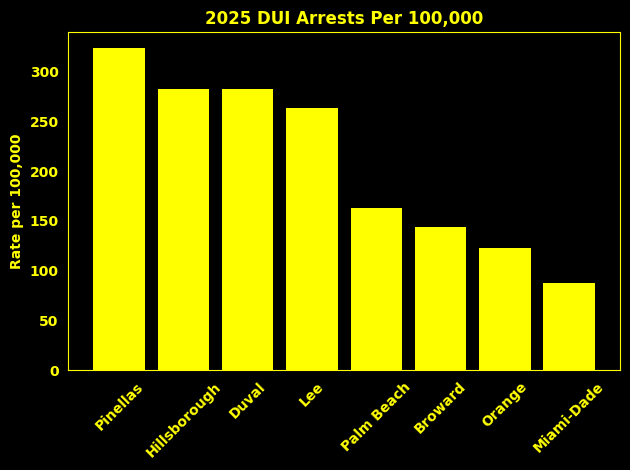
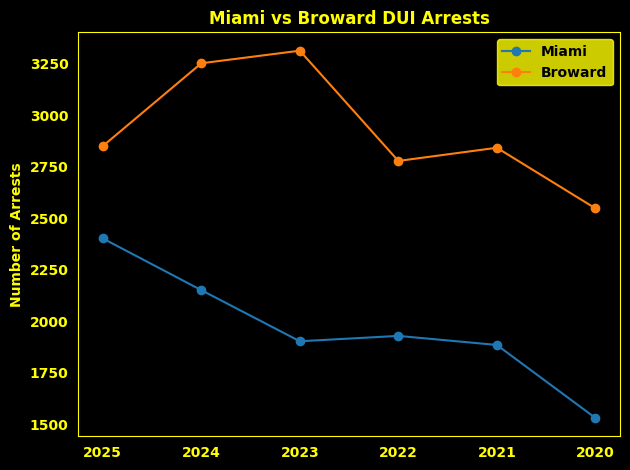
Florida drivers are entering a new era where DUI cases are more complex, more aggressive, and more data-driven.
What Florida Drivers Should Take Away
The biggest lesson from this case is simple:
Decisions made during a DUI stop now carry more consequences than ever before.
- Refusing a test can lead to criminal charges
- Taking a test can provide evidence against you
- Either way, the legal strategy starts immediately at the roadside
This is why having an experienced DUI defense attorney is critical from day one.
Why Media Like CBS Ask The Ticket Clinic
When major legal stories break, outlets like CBS turn to experienced attorneys who understand both the law and how it plays out in real cases. That is why Ted Hollander and The Ticket Clinic are frequently featured.
With decades of experience and millions of cases handled, The Ticket Clinic provides clear, practical insight on complex issues like Florida’s new DUI refusal laws. In the CBS interview, Hollander explained both the risks of refusing a test and how it can impact the evidence in a case.
That ability to quickly break down evolving laws into real-world implications is exactly why media organizations call on The Ticket Clinic.
Final Thoughts
The arrest of Tiger Woods is more than a celebrity headline. It is a real-world example of how Florida’s new DUI refusal laws are already reshaping the legal landscape.
As Ted Hollander explained, these laws create both new risks and new legal complexities.
For drivers, the takeaway is clear. DUI law in Florida has changed, and understanding those changes could make all the difference in the outcome of a case.