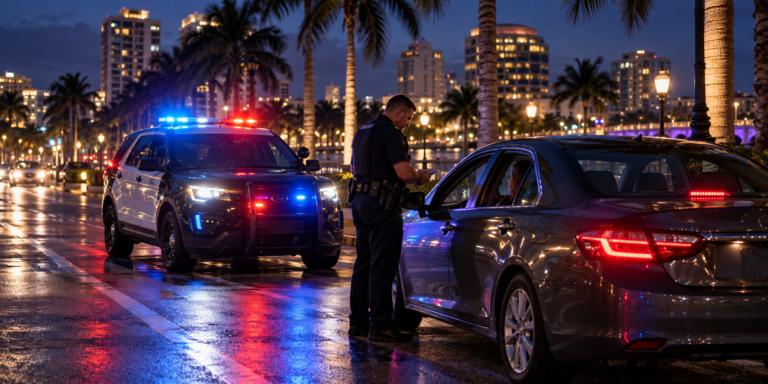
If you have been arrested for DUI in Florida, the case against you is not built on one piece of evidence. It is a collection of observations, tests, and reports that law enforcement and prosecutors will use to try to prove impairment.
Understanding how DUI evidence works is critical. It is also where an experienced Florida DUI lawyer can make a major difference.
Below is a breakdown of the most common types of DUI evidence, how they are used against drivers, and how they may be challenged.
Body Camera Footage
Most DUI stops today are recorded using police body cameras or dash cameras. This footage often becomes one of the most important pieces of evidence in a DUI case.
How it is used against you
Prosecutors will use body cam footage to show:
- Driving behavior before the stop
- Your interaction with the officer
- Physical signs of impairment, such as slurred speech or balance issues
- Performance on field sobriety exercises
This footage is often presented in court to create a visual narrative that supports the officer’s report.
How it may be challenged
Body cam footage does not always tell the full story. A DUI lawyer may challenge:
- Poor camera angles or missing footage
- Audio issues that distort what was said
- Lighting conditions that make observations unreliable
- Whether the officer’s interpretation matches what is actually visible
In some cases, video evidence can actually help the defense if it contradicts the officer’s written report.
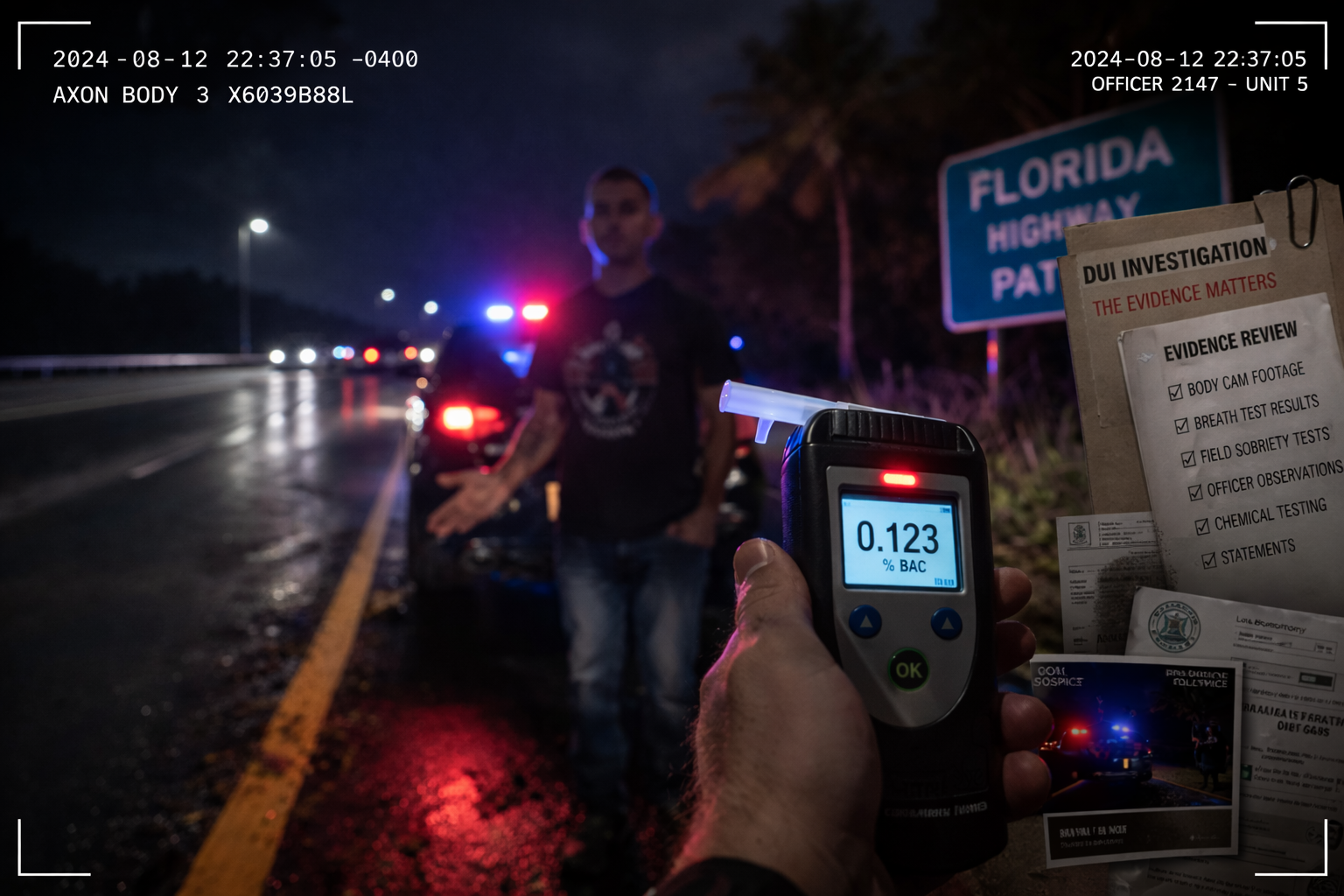
Breathalyzer Test Results
Breath testing is one of the most well known forms of DUI evidence in Florida. Officers use these devices to estimate blood alcohol concentration.
How it is used against you
If your breath test result is at or above 0.08, prosecutors will argue that you were legally impaired. These results are often presented as scientific proof of intoxication.
How it may be challenged
Breathalyzer results are not always as reliable as they seem. A DUI lawyer may question:
- Whether the device was properly calibrated
- Whether the officer was trained and certified to operate it
- Whether the required observation period was followed
- Whether medical conditions or external factors affected the result
Even small procedural mistakes can raise serious doubts about the accuracy of the test.
Field Sobriety Exercises
Field sobriety exercises are roadside tests designed to evaluate coordination, balance, and attention.
How they are used against you
Officers will testify that you showed “clues of impairment” during tests such as:
- Walk and turn
- One leg stand
- Horizontal gaze nystagmus
These observations are often used to justify the arrest and support the overall case.
How they may be challenged
These tests are highly subjective and can be influenced by many factors unrelated to alcohol.
A DUI lawyer may argue:
- The instructions were unclear or improperly given
- The testing conditions were poor, such as uneven pavement or bad weather
- The driver had physical limitations, fatigue, or anxiety
- The officer misinterpreted the results
In many cases, what is presented as “failure” is open to interpretation.
Officer Observations
An officer’s testimony is a key part of almost every DUI case.
How it is used against you
Officers will typically report:
- The smell of alcohol
- Bloodshot or watery eyes
- Slurred speech
- Erratic driving
These observations help establish probable cause and build the foundation of the case.
How it may be challenged
These factors are not exclusive to impairment.
A DUI lawyer may highlight:
- Alternative explanations, such as allergies, fatigue, or stress
- Inconsistencies between the report and video evidence
- Bias or assumptions made during the stop
Cross examination often focuses on testing the credibility and accuracy of these observations.
Chemical Tests, Blood and Urine
In some cases, law enforcement may use blood or urine tests, especially when drugs are suspected.
How they are used against you
These tests are presented as more direct scientific evidence of substances in the body.
How they may be challenged
There are strict legal requirements for collecting and handling these samples.
A DUI lawyer may examine:
- Chain of custody issues
- Delays between driving and testing
- Contamination or improper storage
- Whether proper legal procedures were followed
If protocols are not followed exactly, the results may be questioned or even excluded.
Statements Made During the Stop
What you say during a DUI stop can also be used as evidence.
How it is used against you
Statements such as admitting to drinking or explaining where you came from can be used to support the case.
How it may be challenged
A DUI lawyer may review:
- Whether your rights were properly explained
- Whether statements were taken out of context
- Whether questioning was conducted lawfully
In some situations, statements can be suppressed if obtained improperly.
The Big Picture, How DUI Cases Are Built
No single piece of evidence usually decides a DUI case. Prosecutors attempt to combine multiple elements into a narrative of impairment.
But every piece of evidence must meet legal standards. If one part is flawed, it can weaken the entire case.
That is why a detailed review of all evidence is critical.
Why Legal Experience Matters
DUI cases are not just about what happened on the road. They are about how evidence is collected, interpreted, and presented in court.
An experienced Florida DUI lawyer understands:
- How to analyze each piece of evidence
- Where mistakes are commonly made
- How to challenge weak or questionable evidence
- How to protect your rights at every stage
Final Thoughts
DUI evidence can seem overwhelming, but it is not always as strong as it appears. From body cam footage to breath testing, every detail matters and every detail can be questioned.
If you are facing a DUI charge, having the right legal team can make a significant difference.
Florida DUI Lawyer is the smart choice for criminal traffic cases.